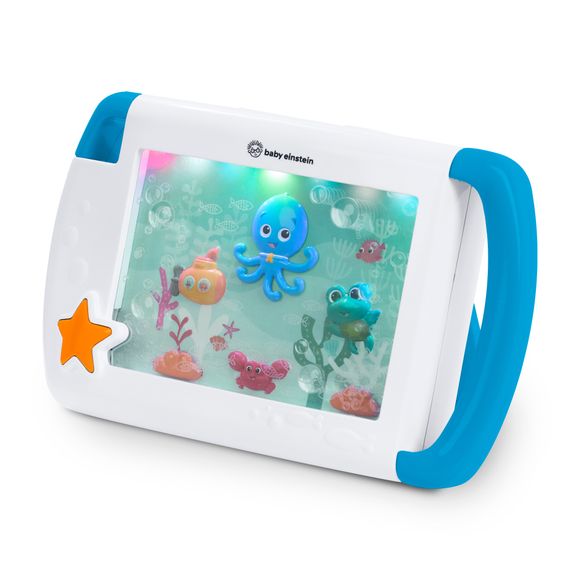
Baby Einstein Opus Ocean Of Discovery Tummy Time Water Mat
$24.99
4.5 out of 5 4.5 (25)
30% off 2nd Baby Einstein Item
Babies don’t all develop in exactly the same way at exactly the same time. Each baby likes to do things their way, whether that’s growing a tooth, giving you that first beaming smile or rolling over. But understanding baby milestones that they reach at certain points can give you a good picture of how they are developing.
“Milestones are a really good guide when thinking about a child's physical, social and emotional health,” explains paediatrician Dr Victoria McKay. “They give a holistic picture of a child’s development.”
Developmental milestones are meant to be a guide. “It’s critical that these milestones are understood over time, and in the context of that child’s overall health and development,” says Dr McKay.
“What we might think is typical for one baby might be very different for another. If a child hasn’t met a milestone, it should prompt us to look at what’s happening. It doesn’t necessarily mean there’s a problem; everyone runs their own race.”
The newborn stage is a big adjustment for everyone. “The first three months of a baby’s life are called the fourth trimester for a reason,” says Dr McKay. “This stage is really about being fed and everyone – including the parent – getting as much love, care and sleep as possible."
So you don’t need to worry too much about tracking exact milestones for newborns. But it is fun to watch how they learn and change at this age:
Babies are mastering some huge skills at this age. “Babies have to learn how to feed,” says Dr McKay. “Some parents can feel distressed by the fact their baby isn’t putting on weight, but babies do that at different speeds as they get to grips with feeding.”
While most babies double in weight during the first six months of their lives, there isn’t a rule of thumb about weight gain, as long as they’re gaining weight consistently. Your child's health nurse will track your baby’s weight and do regular check-ups.
“Babies might smile at you at around six weeks when they can see your face. At around this age they might follow you with their eyes too,” she says.
You’ll likely notice your baby start to properly look at you at around the eight-week mark. “Most babies start to focus at around two months,” says Dr McKay.
By three months, most babies should be able to hold their heads up and might also be reaching for things.
“The most important thing at this age is to provide nourishment and comfort to your baby when they need it,” says Dr McKay. That might look like skin-to-skin contact with your baby, cuddling them, talking to them, holding them when they cry, and just being with them.
You might like to pop them on a blanket or baby activity mat on the floor so they can practise their tummy time. Always stay with your baby during tummy time.
Specialists recommend these tips to help support your baby’s development:
“This is the time when your baby starts to become much more interactive,” says Dr McKay. There are lots of new milestones to be aware of during this period:
“Your baby is likely to start properly rolling [their body from front to back] between three to six months,” she says.
“Some babies do very early mirroring of sounds and facial expressions before three months of age, but proper babbling usually starts at around four months old. Blowing raspberries might start around this age too.”
You can start introducing solids to your baby at around six months, reports Better Health. Learn more about introducing your baby to solids.
“Some babies are early crawlers and might start moving at around five or six months old. However, many babies won’t crawl until somewhere between nine and 12 months. There can be real breadth in these milestones,” says Dr McKay.
“Typically a baby will be able to sit without support at around six months.” They may still need a bit of help to get into the sitting position, though.
“The most important thing in aiding your baby’s development at this age is to be responsive to them,” says Dr McKay. “From three to six months onwards, babies have an ability to express their needs – and really encouraging that communication is wonderful. You can do this by making eye contact with them, smiling and talking to them.”
“When we’re looking at our baby’s eyes (rather than a screen) we’re responding to their verbal and non-verbal gestures,” explains Dr McKay. “ We're starting to teach them how to respond by modelling what to do.”
Exposing them to different sights and sounds is really important. “Take them out for walks, to the park, to the local library. Let them see the world – at this age, everything is interesting.”
Setting up habits, such as reading every night, is great at this age. “Sometimes it’s not about what the baby gains at this point in time, but starting habits that will help them later,” says Dr McKay. “At this age a baby won’t understand language, but they’ll understand your tone of voice. We know reading is critical to children’s development so we can start to teach them to settle with stories and words.”
Babies are attracted to “high contrast items. Black and white books are lovely for their eyes. Children are attracted to bright colours too,” says Dr McKay. She also suggests adding toys that are easy for them to manipulate at this age.
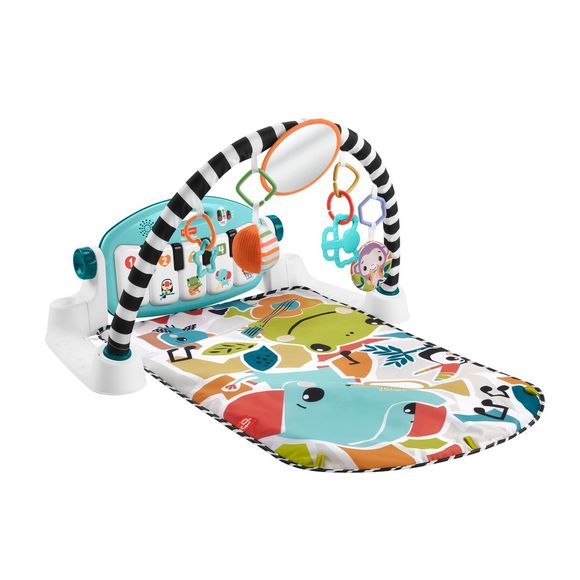
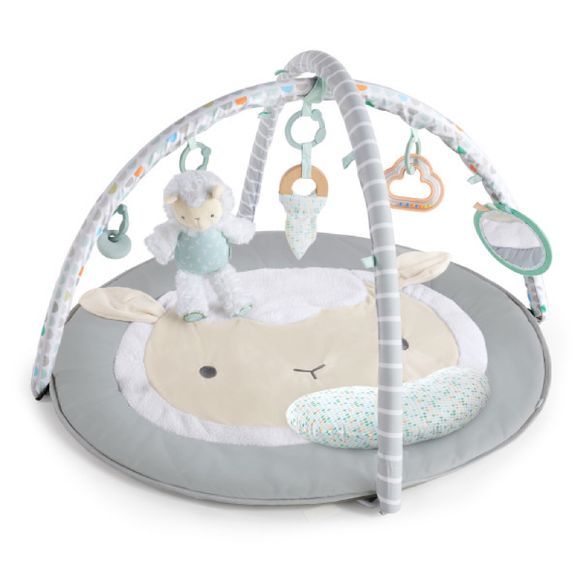
A baby activity centre is a popular choice because it’s a clean space for a baby to play on the floor, with bright colours and fun toys to reach for. Your baby can use it lying down on their back, during tummy time or even when they are sitting up.
It’s a good idea to keep note of when your baby is meeting their milestones. “There are key questions in the baby book that you’re given when you leave the hospital. It’s a good idea to answer these and use them as prompts,” says Dr McKay.
If you think there’s a milestone your baby hasn’t reached, it’s a good reminder to book in with your child and family health nurse, says Dr McKay.
While most variations in reaching milestones are normal, watch for key signs like lack of eye contact, no smiling by a couple of months, or not startling with loud noises.
Contact your child health nurse or call Pregnancy Birth and Baby on 1800 882 436. Don't panic if things aren't happening exactly by the book though, as "sometimes a child might be developing beautifully but one aspect might be taking longer," says Dr McKay.
Other signs to watch out for include:
Every baby develops at their own pace, and milestones are just helpful guides. Trust your instincts, enjoy watching your little one grow, and reach out for support when you need it.
The newborn stage covers the first three months of a baby's life, which Dr McKay calls "the fourth trimester." This stage is really about being fed and everyone getting as much love, care and sleep as possible.
Most babies start to properly focus and look at you around the eight-week mark, or about two months old. They might also start following you with their eyes around this age.
Babies typically start smiling at around six weeks when they can see your face clearly. This is one of those lovely early milestones that shows your little one is becoming more social and interactive.
Don't panic, "sometimes a child might be developing beautifully but one aspect might be taking longer," says Dr McKay. Contact your child health nurse or call Pregnancy Birth and Baby on 1800 882 436 if you notice concerning signs like lack of eye contact or no smiling by a couple of months.